
World news
Strait of Hormuz to close?

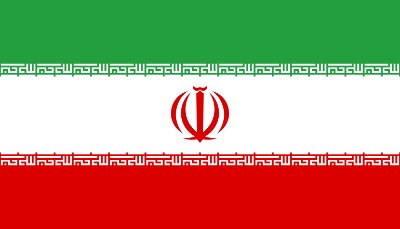
Officials from Iran threatened the world with another oil shock over the weekend. A ranking general said that he had plans in place to close the Strait of Hormuz. The Majlis, or parliament, is debating a bill to do just that. But the Arab countries in the Persian Gulf region are looking for ways to bypass the Strait of Hormuz. And the US Navy has its own plans to keep the Strait open.
Strait of Hormuz, oil highway to the world
The Strait of Hormuz is the most important oil route in the world. According to Russia Today, 17 million barrels, on average, sailed through the Strait every day in 2011. Depending on whom one asks, that’s anywhere from 16 to 40 percent of the total oil that comes out of the ground around the world. Majlis Member Mohammed Hassan Asfari put it at 16 to 20 percent, but the same article (from Fars News Agency) put it at 40 percent. Infowars’ Paul Joseph Watson puts it at 33 percent.
The Majlis’ National Security and Foreign Policy Commission already has a bill to close the strait. At last report, 100 of 290 Members of Parliament are co-sponsoring this bill.
Flag of the Islamic Republic of Iran (1980)
In response, several Arab countries are looking for ways to bypass the Strait of Hormuz. Abu Dhabi loaded its first cargo from a new pipeline that can carry 1.5 million barrels a day. It hopes to handle the heaviest tankers so that they don’t have to use the Strait.
Saudi Arabia has a 5-million-barrel-a-day pipeline that can carry oil from the Persian Gulf to the Red Sea. (They also re-activated an old pipeline that can carry 1.65 million barrels a day to the Red Sea from Iraq.) Iraq is building its own pipeline to a Turkish port.
Still, all these pipelines together might carry only half the oil that passes through the Strait of Hormuz today. Iranian MP Asfari (see above) bragged yesterday that the Arabs simply don’t have any other way to get their oil to market. He exaggerates, of course. But cutting the flow of oil by half would still send oil prices higher. (Watson guesses that oil could fetch as much as $300 a barrel, or even $500.) Retail gasoline is already getting more expensive in the USA.
Military maneuvers
Major General Hassan Firouzabali, Iran’s chief of staff, said yesterday that he already has a plan. He can close the Strait of Hormuz whenever the Supreme Leader of Iran (Ayatollah Ali Khameini) gives the word. (See also here.)
The US Navy has its own plans. It will use robot submarines, the latest technique in minesweeping, to clear any mines that the Iranians might lay in the Strait. Still, the Navy admits that the Iranians can sink a few ships and block the Strait at least temporarily.
If Iran closes the Strait of Hormuz, it will invite war with every country having territory bordering the Persian Gulf upstream of the Strait. Of course, any such war will block the Strait as long as it lasts. That will increase the price of oil worldwide. But that might prompt the Arab states to build even more pipelines to bypass the Strait.
Attack on Iran?
Rumors are flying all over the Internet, saying that Israel, or the USA, or both, will attack Iran in October. This could be an “October Surprise” from putative President Barack H. Obama. It could also explain why Prime Minister Benjamin Netanyahu of Israel has:
- Formed a national unity government between his Union (Likud) Party and the opposition Forward (Kadima) Party.
- Authorized Rav Aluf Benny Ganz, the chief of staff of the Defensive Armies of Israel, to call up as many as 22 reserve battalions.
Netanyahu might be getting ready for the Iranians to hit back at Israel if either the Israelis or the Americans attack Iran.
ARVE Error: need id and provider
[amazon_carousel widget_type=”ASINList” width=”500″ height=”250″ title=”” market_place=”US” shuffle_products=”True” show_border=”False” asin=”B002EQA102, 0471679526, 044654146X, 0789209284, 0688123635, 0345461924, 0253349184, 1929354002, B00005S8KR, B000RPCJPC” /]


Terry A. Hurlbut has been a student of politics, philosophy, and science for more than 35 years. He is a graduate of Yale College and has served as a physician-level laboratory administrator in a 250-bed community hospital. He also is a serious student of the Bible, is conversant in its two primary original languages, and has followed the creation-science movement closely since 1993.







-

 Constitution4 days ago
Precinct Strategy scores again
-

 Education5 days ago
Title IX revision sparks State revolts
-

 Civilization3 days ago
Legacy media already assume Trump wins
-

 Civilization3 days ago
SCOTUS Is Last Bulwark Against Critical Legal Studies
-

 Civilization17 hours ago
Antisemitism – and misguided legislation
-

 News4 days ago
Time to Fly – Really Fast
-

 Education4 days ago
The Road Back to Normalcy Starts Where the Problem Began: College Campuses
-
 Civilization3 days ago
What 10 Years of U.S. Meddling in Ukraine Have Wrought (Spoiler Alert: Not Democracy)
a) You’re citing Infowars? As reliable sources go, that one… ranks a little low on the scale.
b) This really doesn’t jibe with the rest of your worldview. I thought, in your world, Obama hated Israel and always sided with Muslims. But yet, you foresee Obama working in conjunction with Israel to strike at Iran.
c) Gas prices have actually trended a little lower the past few months, with a recent small uptick. (and have, incidentally, yet to reach the all-time high they did in Summer of ’08. Refresh my memory, please; who was President then?)http://ycharts.com/indicators/gas_price
Obama has lost his “core.” Then again, he wouldn’t want the Israelis to do anything in Iran. He would want to do the job himself, just to get votes.
As for those gas prices: a fill-up station local to me raised its prices sixteen cents per gallon in one week.
And you also missed something: the crew of a US Navy oiler today fired on an Iranian dinghy that not only got too close but also ignored repeated orders to halt or to turn about.
You’ll note I did acknowledge a recent uptick in gas prices. Really, it’s summer — gas prices usually climb due to summer traveling.
As for the US Navy oiler firing on an Iranian dinghy — are you actually arguing they should not have fired on it? After the USS Cole?
For that matter, where did you get it was Iranian? CNN reports (link to cnn.com) it was a small pleasure boat out of Dubai.
That a dinghy approached that close, shows that the Iranians were testing American resolve. They have found out, expensively (one sailor dead, three wounded, and a small boat lost), that at least ship’s captains, Officers In Charge, and Officers in Tactical Command are quite willing to defend their crews, their ships, and, when applicable, their squadrons, task forces, etc., with deadly force if necessary. Now what they haven’t had an opportunity to find out is whether the putative President is willing to let the Strait of Hormuz stay sealed. Even we don’t know that.
Though I suspect that the putative President would have a motive to start something, if he thought he could cover himself with glory. The right thing—perhaps—in the wrong motive.
“That a dinghy approached that close, shows that the Iranians were testing American resolve.”
Amazing. You just completely ignored the fact that the boat was from Dubai, not Iran. You know that the Emiratis are sunni Arabs rather than shia Persians, right? All the indications so far are that this was a dubious incident in Emirati territorial waters and had absolutely nothing to do with Iran.
Your naïveté, if that’s what it is, amazes me. Don’t you know that Iran often fights its wars with irregulars?
“Don’t you know that Iran often fights its wars with irregulars?”
Of course I know that, but I don’t see how it’s at all relevant. There’s no reason to believe that this boat had anything to do with Iran. It appears to have come from Dubai and to have been in Emirati territorial waters when it was fired on. With the information we have right now the Iranian connection is entirely in your head.
On the contrary, there is every reason to believe that the small boat came from Iran. Its crew ignored repeated orders to halt or to turn about. In fact, after turning about once, they came in again.
Where is the motive by Dubai?
Seek whom the crime will profit.
“there is every reason to believe that the small boat came from Iran.”
The US Navy disagrees. The boat wasn’t Iranian. In fact it appears to have been a Dubai-registered fishing boat crewed by Indian guest workers.
“Its crew ignored repeated orders to halt or to turn about.”
I wasn’t aware that Emirates-registered boats in Emirati territorial waters were under any obligation to obey orders from foreign warships.
“Seek whom the crime will profit.”
What crime?
Any skipper knows never to approach an armed ship whose crew are shouting orders to you to halt, keep off, turn about, etc.
That skipper acted foolishly. Naturally it looked a little bit too neat.
“Any skipper knows never to approach an armed ship whose crew are shouting orders to you to halt, keep off, turn about, etc.”
OK Terry, here’s a scenario for you.
HMS Daring is approaching Boston to pay a courtesy visit. Inside US territorial waters it is approached by a small boat which ignores demands to keep clear. The crew open up with a GPMG, killing one US citizen and wounding three.
Would you be supporting the right of foreign warships to shoot up boats they don’t like, or yelling about arrogant Brits murdering US citizens in their own waters?
Here’s the key phrase you’re missing here: international waters.
“Here’s the key phrase you’re missing here: international waters.”
That would only be a key phrase if it was relevant, which it appears not to be. All the reporting I’ve seen on this incident says it happened in Emirati territorial waters, so my analogy stands unless you can show that this wasn’t actually the case.
In any case, how would you feel if a British warship attacked a New Bedford-registered trawler in international waters 100 miles off the Irish coast? Because that came close to happening more than once.
If one of Her Majesty’s ships had previously suffered near-destruction in US or Canadian territorial waters, I would have considerable pause before taking the sort of attitude that you seem to be recommending that the UAE take toward this incident.
What ought to interest you is: the UAE are not making any protests. Guess who are? The Iranians. Hasn’t it occurred to you to ask why?
“If one of Her Majesty’s ships had previously suffered near-destruction in US or Canadian territorial waters, I would have considerable pause before taking the sort of attitude that you seem to be recommending that the UAE take toward this incident.”
As the USS Cole was attacked in the Yemen a better comparison would be a Royal Navy ship having been attacked off the coast of Peru. The attitude I’m recommending the UAE takes is that they assert the exclusive right to use deadly force in their own waters, because delegating it appears (given the information we have at present) to have resulted in an attack on an innocent fishing boat.
“What ought to interest you is: the UAE are not making any protests. Guess who are? The Iranians. Hasn’t it occurred to you to ask why?”
Oh, I know why. It’s because the UAE is more or less a US ally, while Iran currently isn’t. Rightly or wrongly, Iran feels threatened by US activities in the region. After all they have substantial US forces on their eastern border, more substantial US forces only recently withdrew from their western border and they’re confronted with periodic belligerent noises from the USA and its regional lapdog. Why do you think they support the Taliban? It certainly isn’t because they agree with them, which they emphatically don’t; when the Taliban were in power Iran gave very considerable assistance to the Northern Alliance, especially Ismail Khan. Their current support is simply to make sure that Afghanistan doesn’t stabilise enough to make a good start line for an invasion of Iran.
The Iranian regime is repellant, but then so was Stalin’s and he got invaded without provocation. Simply being obnoxious doesn’t mean that you don’t have legitimate security concerns.
Again — how do you know the boat was Iranian? It came out of Dubai, and was a small pleasure boat.
If it was Iranian, wouldn’t it have been out of Bandar-Abbas?
How do you know? Mightn’t the Iranian Revolutionary Guards want you to think that? They don’t think the way we do. They violate every convention of warfare, and often fight their wars with irregulars and agents provocateurs.
Unlike the Americans, of course.
Let’s be realistic about this. Between states, there is near total equivalence. One state can never allow itself to be ethically “cleaner” than the other, for they will be annihilated. There can never be honesty nor fair play nor honour. You either horse trade, twist, turn, duck, weave, ally, betray and ally again, waiting for the time to be right time to make your move – or you become the next Ozymandias. That’s all there is, Terry. There is no titanic struggle between good and evil. There is no grand plan, no divine favour. It’s just a competition between big guys who manage to fight their way to top and gain control of a load of men and weapons in order to grab the loot and enjoy a power trip while it lasts. And that is true of *every* country. Yours, mine, Iran, Israel, todo las naciones.
Thank you, Al-Macchiavelli. My regards to your great-to-the-nth uncle, Niccolo.
The Big Guy Upstairs will have a few things to say about that, and sooner than you think.
A good way to accurately and decisively refute my point that the US is not some kind of chosen land, and that it has engaged in precisely the sort of activities you believe it would never ever undertake.
The sauces in this article are not very flavoursome. We have a base of Russia Today, with a strong pinch of InfoWars, and pinches of Fars and some local brand I’ve never heard of.
There is plenty of good material out there to use in researching this old topic. Why go with the bottom feeders of the net?
And finally, Iran threatening to close Hormuz is not news. They threaten this all the time – just background sabre rattling that usually precedes some horse trading. Iran and the US do this dance every time they interact. The US dispatches a few ships, Iran harasses said ships and makes noise about Hormuz – or plays some naval wargames – and the world keeps on turning. There really is “nothing to see here”.
Maybe—or maybe not. Not this time.
Latest reports are that the boat was occupied by fishermen from India, Terry.
link to online.wsj.com
India.
Not Iran. (Three letters in common, though!)
Are you going to admit you were wrong?
We’ll see what the Navy says.
From the WSJ article I linted to:
“U.S. officials said the small boat wasn’t Iranian.”
Do you think the Navy is going to contradict that?
I know that the Navy will say what it said before: the skipper of that vessel ignored repeated orders to halt, turn about, or keep off. That skipper did not keep off.
How do you know that the Iranians didn’t bribe him?
“How do you know that the Iranians didn’t bribe him?”
Oh, I don’t know… the complete lack of evidence that this is anything other than some poor Indian fool being somewhere he shouldn’t have been?
Really, look at it strategically. No one with intent to harm US interests is going to use the “small boat filled with explosives” tactic against the US again, because we’re justifiably worried about such a possibility after the attack on the USS Cole. This incident demonstrated what will happen to any small craft that gets too close to a US Navy ship — it will get shot out of the water. The Iranians aren’t idiots; they know that and would try something else. (That’s the same reason I’d argue attempting to hijack a US airliner would be a stupid tactic — after 9/11, Americans will resist a hijacker.)
“some poor Indian fool being somewhere he shouldn’t have been?”
Not even that. If, as appears to be the case on the information we have right now, the boat was UAE-registered, it had a perfect right to be where it was.